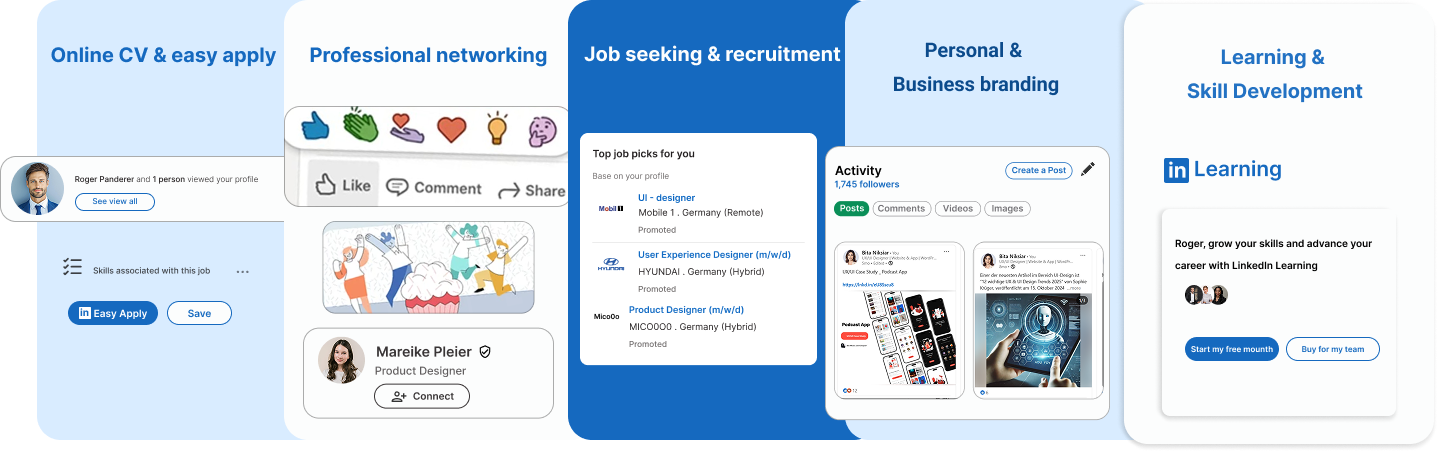
 Lack of application tracking and personalized feedback
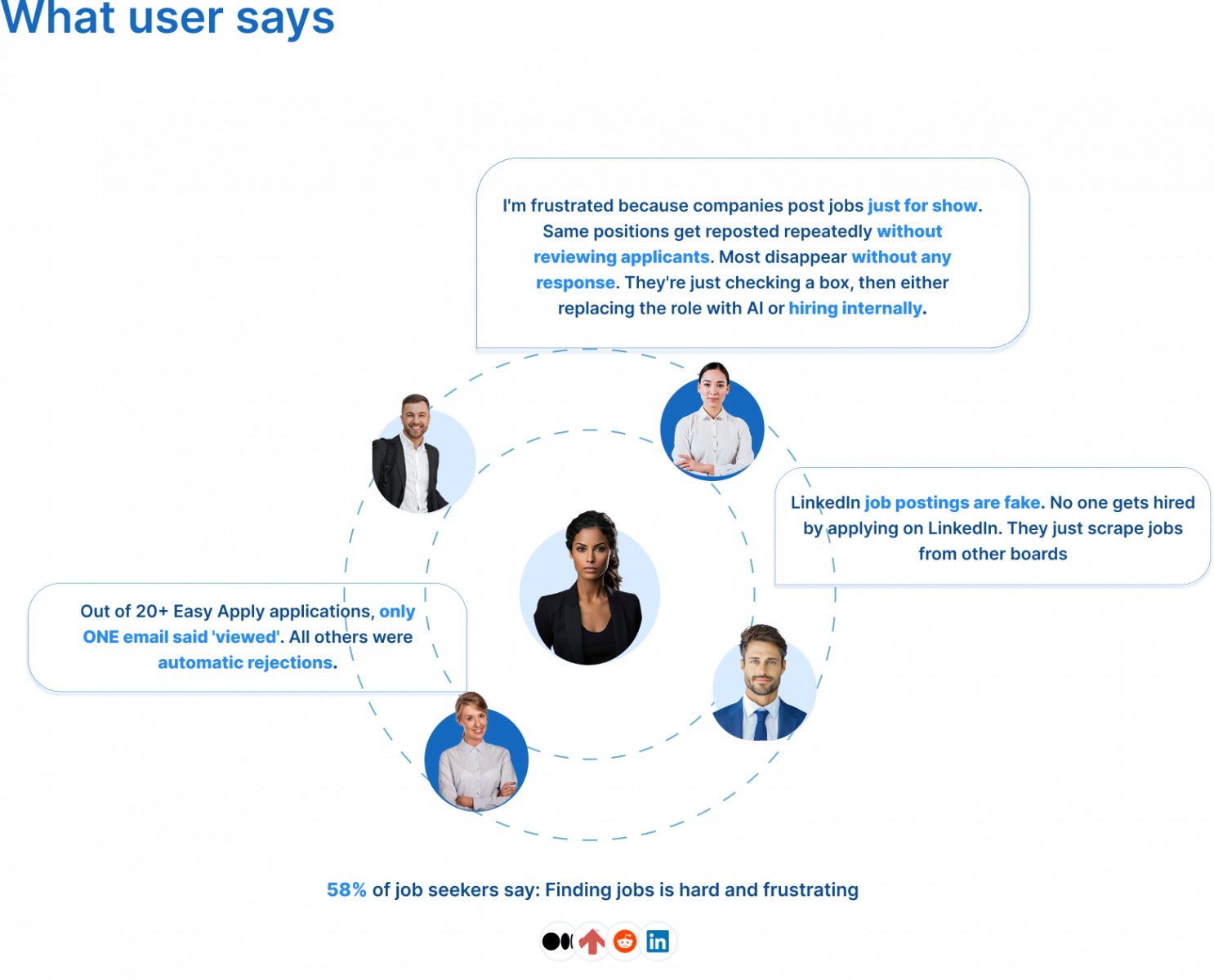
Users, during the online application process, do not know whether their applications have
been seen due to the lack of personalized feedback, clear tracking systems, and precise
filters. They submit their resumes, but receive no response and have no clarity about the
outcome of their efforts. This lack of mutual interaction traps them in a cycle of
discouragement and feeling lost among the overwhelming number of applications.
39% of interviewees got lost among the large number of applications with no response
 Data fragmentation and absence of an integrated job search
management system on LinkedIn
Users, due to the lack of an integrated system for managing and tracking the job search
process on LinkedIn, are forced to use personal and parallel tools to organize their
information. This leads to scattered data, wasted time, a reduced sense of control over the
process, and ultimately a gradual disengagement from LinkedIn as their primary job search
platform.
29% of interviewees use personal and parallel tools to organize their information
 Trust in the LinkedIn platform versus distrust in the job search process
Users generally trust the LinkedIn application itself but remain skeptical about the job search
process on LinkedIn, So They use LinkedIn to find opportunities, research companies, and
identify key people, but they complete their hiring journey elsewhere.
18% of interviewees complete their hiring journey elsewhere
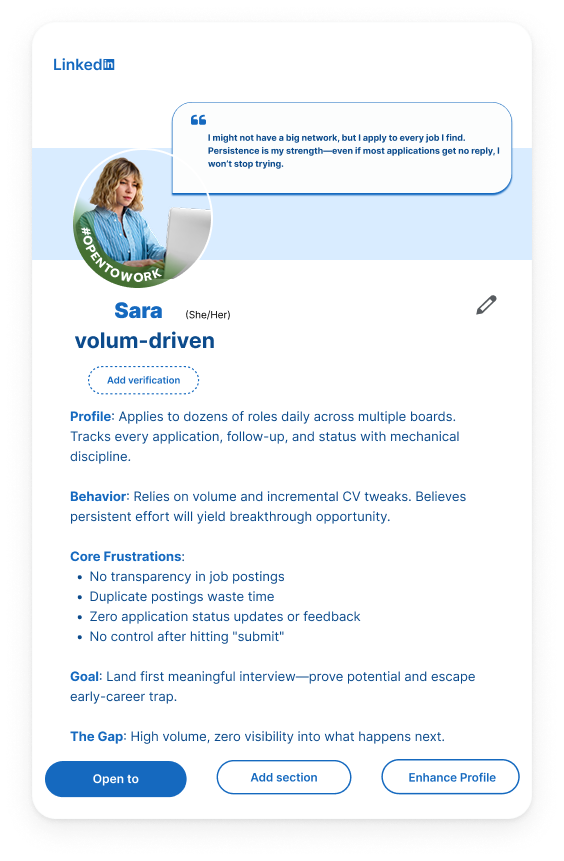
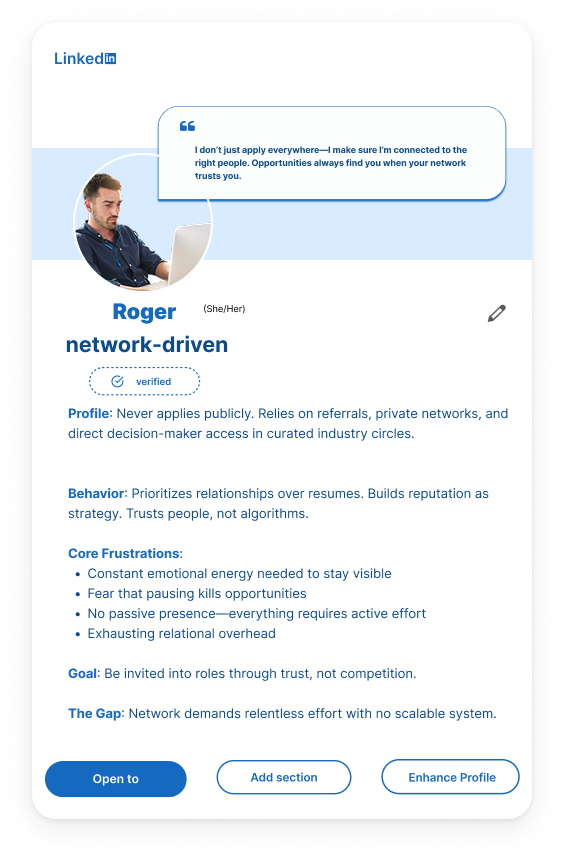
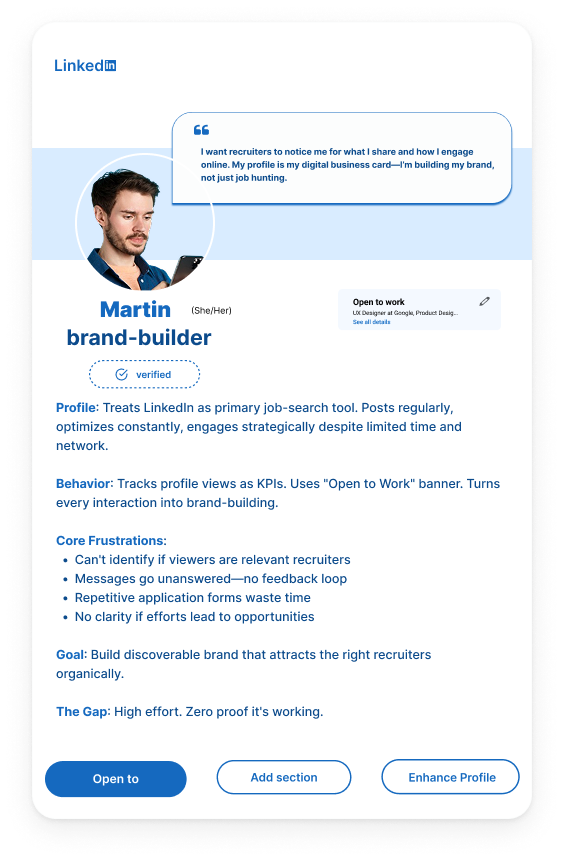
 From direct application to networking and professional profiles
Users have shifted their behavior pattern from “direct application” to
“networking” and professional interactions due to the inefficiency of the
online application system. They have realized that being seen by a real
person (through referrals) increases their chances of getting hired far more
than submitting hundreds of unanswered applications, So they use LinkedIn
primarily to build connections and have become completely discouraged
from using the application section.
14% of interviewees have chosen networking and building a professional LinkedIn profile as their main job search
strategy
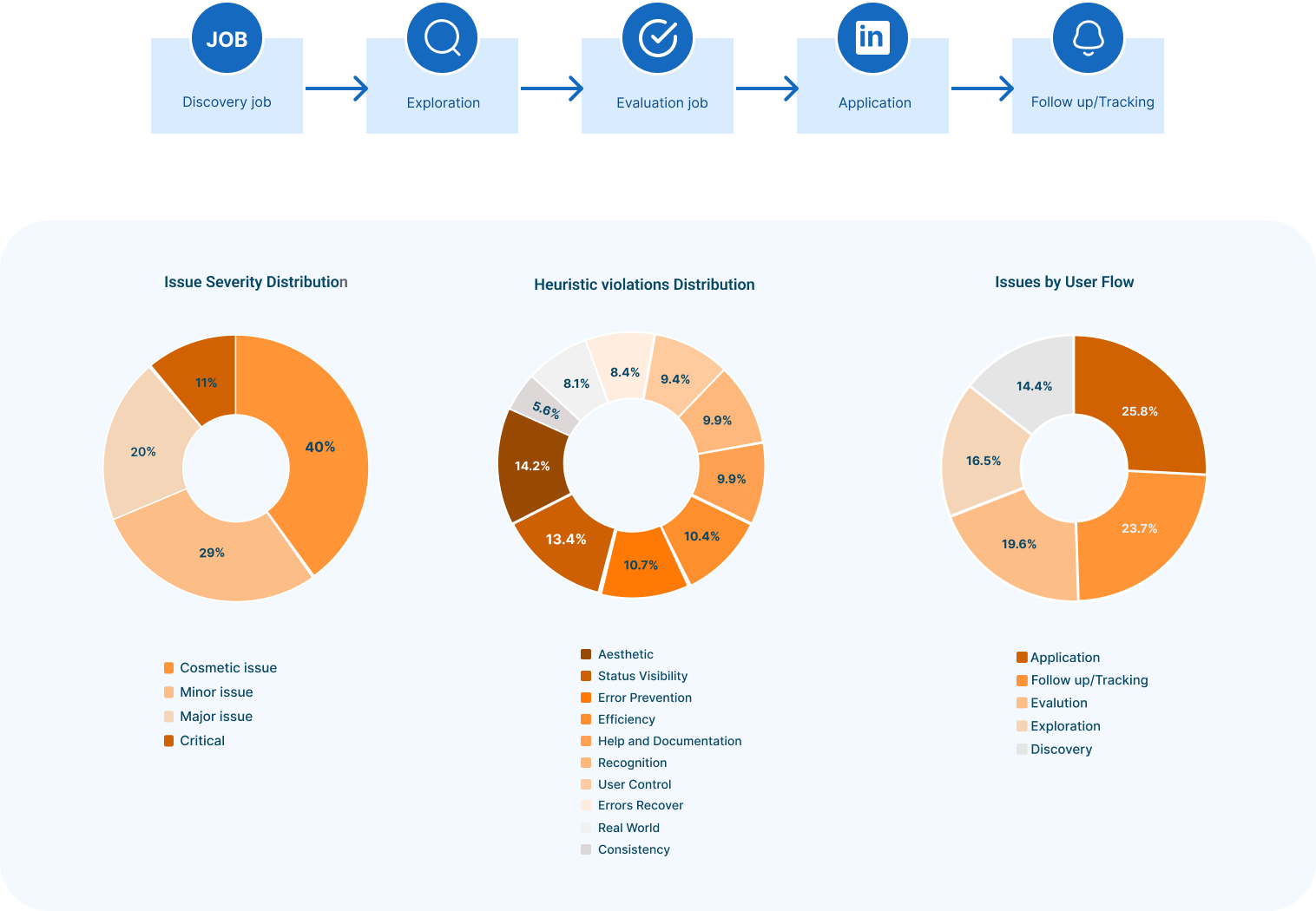
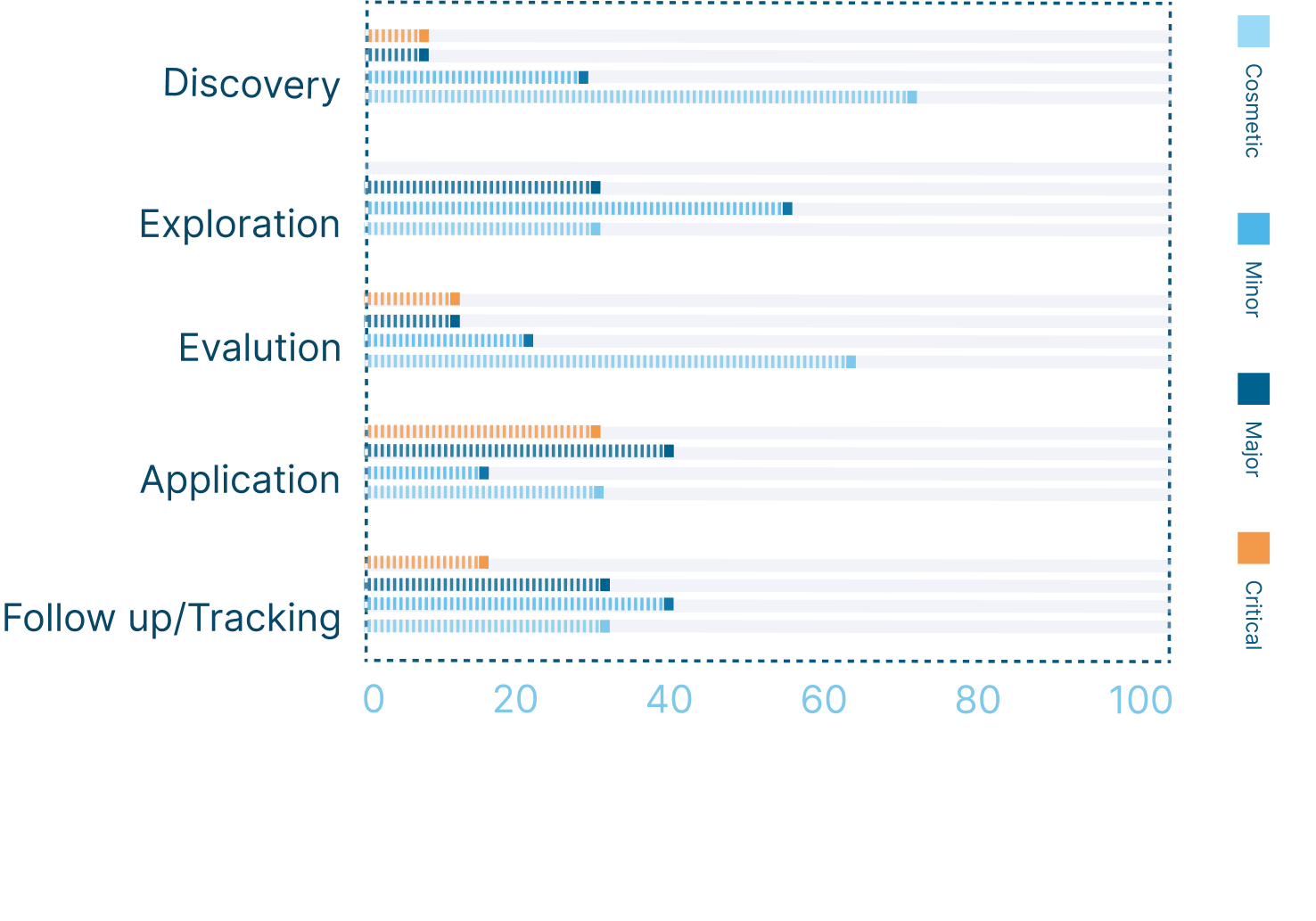
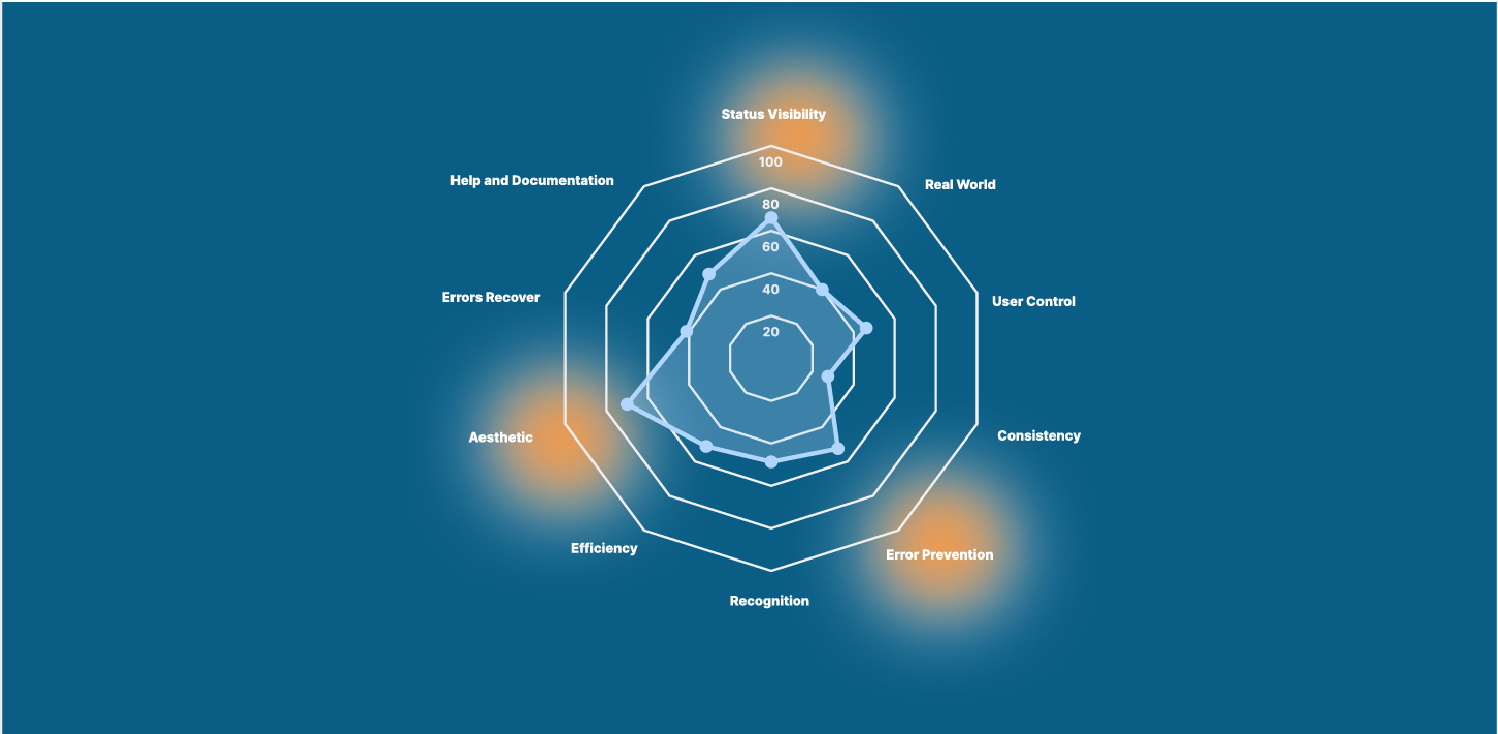
 The heuristic results reveal a clear “ post-application blind spot,” where the most severe usability issues occur in the Evaluation and Follow-up/Tracking stages, driven primarily by poor status visibility and weak error prevention, leaving users uncertain about what happens after they apply.